Does our chaotic, constantly connected, frenetic culture make you yearn for simpler times? For the good old days - whenever those were! You’re not alone. The desire to exchange complexity for comfort and the sharp edges of modern life for the soft curves of an idyllic past has led to the rise of cottage core style. What is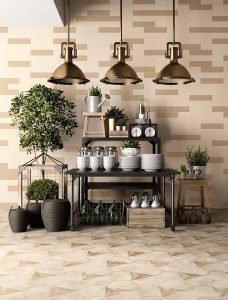 cottage core, and how can you transform your kitchen into an oasis of calm?
Cottage Core: A Simpler Existence
Picture an English cottage, surrounded by soft, green fields and bursting with blooms that travel up the smooth stone walls. Imagine a warm, sunny day with a gentle breeze, and then see yourself going into your home. You are embraced by soft colors, fabrics, books, and maybe even a basket of knitting, which you work on in front of your cozy fireplace.Ok, so maybe you don’t knit, and you’re more likely to order takeout than bake a loaf of sourdough. Still… It sounds pretty nice, doesn’t it? This is cottage core in a nutshell. It’s all about simplicity, comfort, self-reliance; design elements lean towards cozy and rustic, emphasizing natural materials, florals, and a “lived in” aesthetic.
5 Ways to Bring Cottage Core Style to Your Kitchen
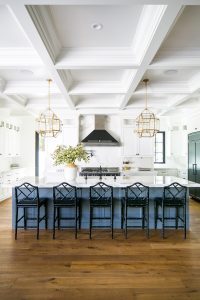 The kitchen is the perfect place to introduce cottage core style. For many of us, it’s the heart of the home, and given our busy schedules, endless obligations, and tech-dominated lives, this space can become a welcome refuge from the demands of our world.
 How can you bring cottage core into the kitchen?
- Cabinet Colors and Door Styles. A cottage core color palette includes warm neutrals, greens, and pastels. There are no hard and fast rules with this style; basically, anything that evokes the softer side of nature goes! You could opt for white, a warm grey or brown shade, or use a light natural stain to show off the features of the wood.
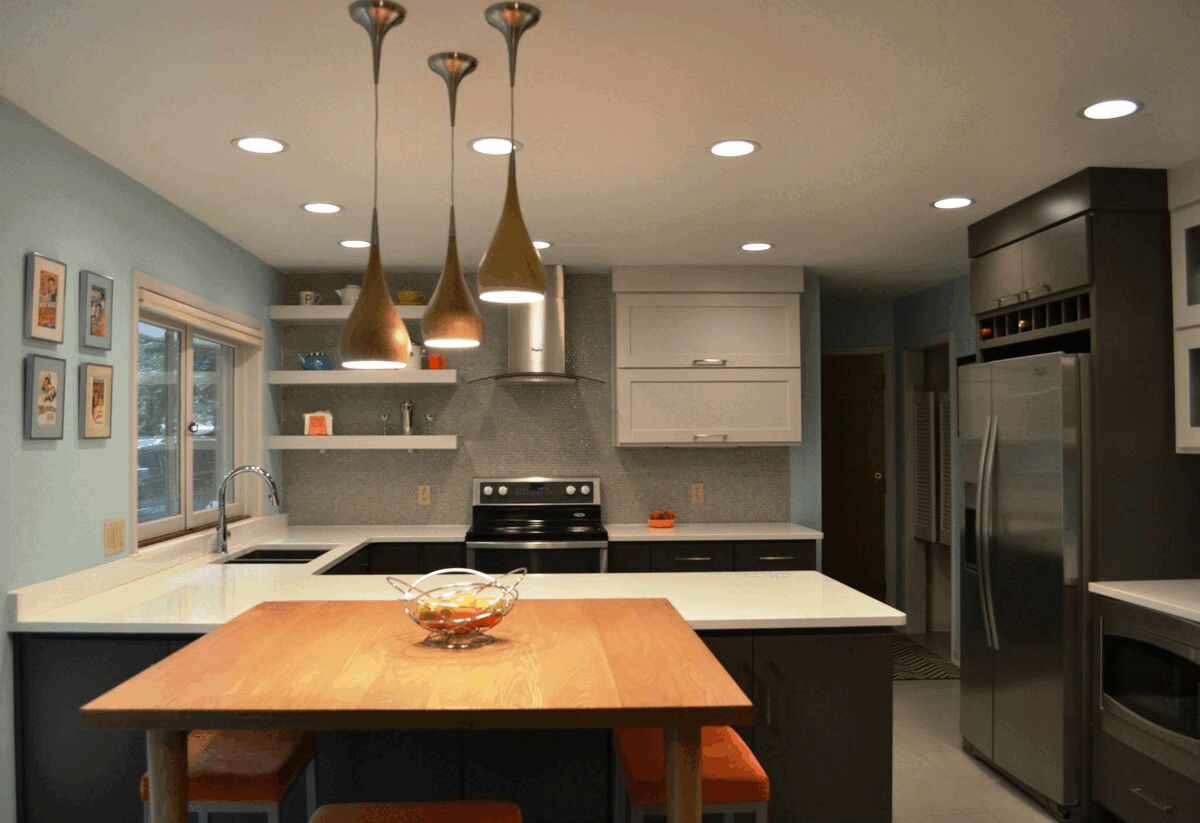
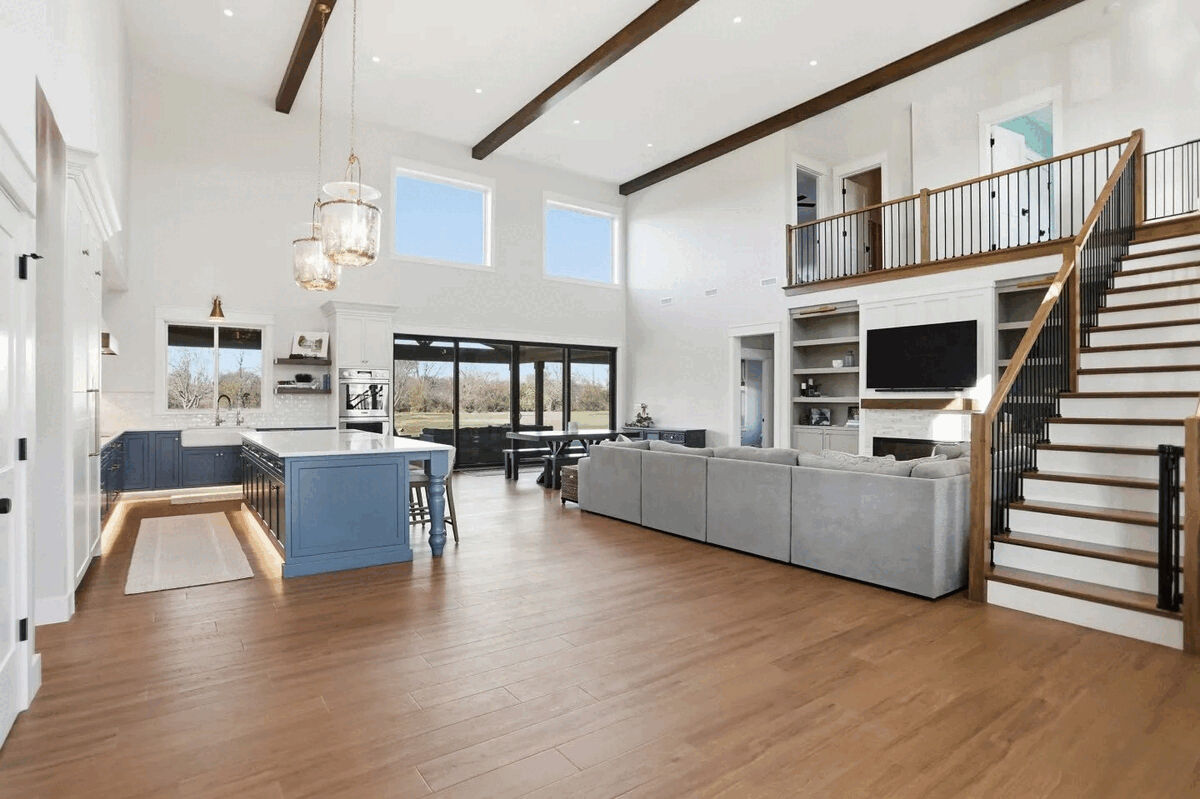
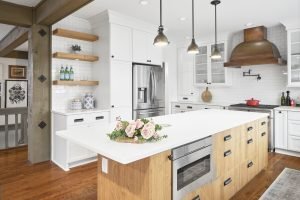 This home isn’t necessarily “cottage core” - but it brings in a few elements. Open shelves and glass-fronted cabinets make the perfect home for Grandma’s tea set, your beloved mismatched vintage dishes, cookbooks, and that sourdough starter you’re trying to keep alive! (We also love the wood beams. Very cottage.)
 - Cabinet Hardware. If you want a more neutral, streamlined cabinet door, take the opportunity to play with the hardware in order to get an eclectic cottage look. Anything from glass and ceramic knobs to a drawer pull you took off an old dresser works! If you want to take it a step further, you can also mix and match styles. If you prefer to tone things down, this is a great time to incorporate sleek hardware with a more antique muted finish.
- Backsplash. Cottage core style backsplashes add a lovely sense of depth and warmth to the kitchen. Again, think soft pastels, floral motifs, and other nature-inspired designs. You could also go with a distressed wood, rustic red brick, or a look that mimics wrought iron designs (think tin ceilings - on your backsplash!)
- Flooring. Flooring is an excellent way to tie a cottage core look together and infuse your kitchen with a sense of coziness. Virginia Tile has introduced some newer styles that are meant to look as if they came out of the European countryside. Take a look:
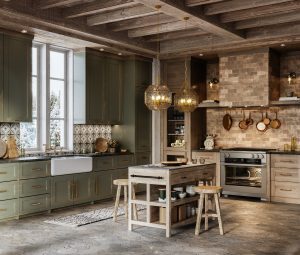 Virginia Tile also offers rustic concrete and terra cotta options that capture the cottage core aesthetic. As you can see, it plays with patterns while infusing warmth into the space.
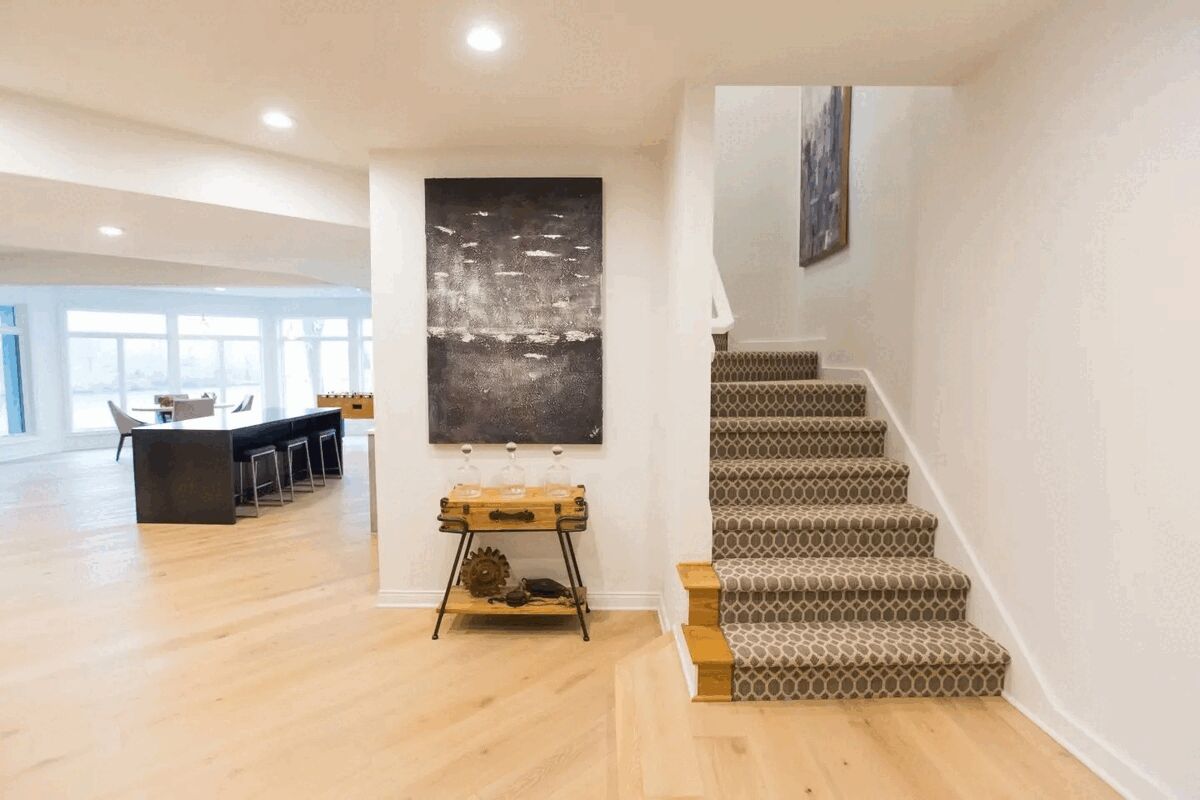
 DuChateau, however, delivers flooring that is truer to what the houses in Europe use, especially homes in the country.
We like both approaches; if versatility is a top priority, though, we would probably come down on the side of DuChateau. It can easily transition into more modern and contemporary styles if you decide to move away from the eclectic cottage look.
Check out our helpful Flooring Visualizer to experiment with some looks!
- Finishing Touches. Cottage core is about the details! Sometimes the simplest touches make the difference. Try:
- Displaying your produce and ingredients in glass jars, ceramic containers, tiered wire hangers, and woven baskets.
- Adding an accent rug to the space. Bonus points if it has a floral design!
- Using flowers and plants to make your kitchen even more inviting. The more the better.
- Planting a container herb garden for your windowsill, open shelf, or countertop.
- Incorporating soft, comfortable fabrics. You can do this on the upholstery of your chairs, for instance, or even the vintage apron you have hanging up, ready for use.
- Using accessories and furnishings with natural materials, such as wood, wicker, and hemp. From a wooden fruit bowl to a hanging hemp plant holder, you
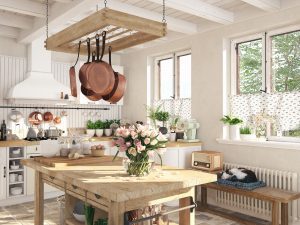 can infuse your space with a nature-inspired feel.
 - Mixing and matching. Cottage core isn’t one thing; it’s a mix of everything. If it brings you joy, it belongs - even if it does not “match.”
- Asking yourself: what would Grandma do? Cottage core style is sometimes referred to as “Grandma Chic.” We love it! If your Grandma was into contemporary design, loved matching, and hated any sort of clutter, though, maybe ask what theoretical, funky Grandma would do.
Cottage core style is really what you make of it. You don’t have to turn your home into an English countryside retreat (but you can if you like!). You can incorporate the elements that speak to you, that will make this space more comfortable and usable, and that will make you fall even more in love with where you live.
If you are interested in cottage core or another style, schedule a design consultation with your home renovation experts. The ACo team is dedicated to bringing your vision to life.
Photos: Virginia Tile, Duchateau and Dave Pluimer
Subscribe to ACo Flooring, Cabinets, Kitchens & Baths's Blog

Comments